

Your Position: Home - Bolts - Comparing torsional shear bolt designs for heavy loads
Heavy-load steel connections depend on more than simply selecting the strongest available bolt. The performance of a connection is also affected by bolt diameter, material grade, grip length, thread position, surface condition, installation method and the compatibility of the complete bolt assembly.
Torsional shear bolts, also known as tension control bolts or twist-off bolts, are widely used in bridges, high-rise buildings, industrial plants, railway structures and other large steel projects. Their distinctive spline-end design allows the outer socket to tighten the nut while the inner socket holds the spline. Once the specified pretension is reached, the spline shears off, providing a visible indication that installation has been completed.
However, not every torsional shear bolt design performs equally under heavy loads. Engineers and procurement teams must compare the complete fastening system rather than choosing a product based only on diameter or tensile strength.
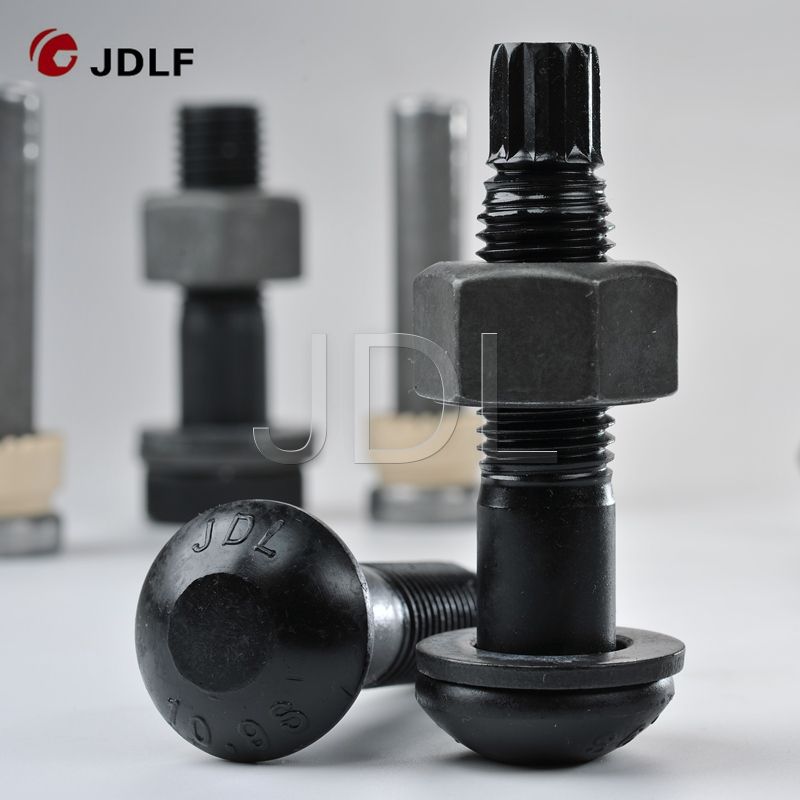
A torsional shear bolt assembly normally consists of three matched components:
A high-strength bolt with a twist-off spline
A compatible high-strength nut
A hardened flat washer
These components are manufactured and tested as one assembly. Mixing bolts, nuts or washers from unrelated batches may change friction conditions and affect the pretension developed during installation.
For heavy structural connections, the most important design variables include:
Bolt strength grade
Nominal diameter
Bolt and grip length
Thread location relative to the shear plane
Spline geometry and break-off consistency
Nut lubrication and rotational performance
Surface treatment
Applicable structural standard
One of the first comparisons is between standard high-strength torsional shear bolts and higher-strength assemblies.
Standard-strength designs are commonly used in conventional building frames, warehouses, commercial structures and general industrial steelwork. They usually provide a practical balance between load capacity, availability, installation speed and project cost.
Higher-strength designs are selected for more demanding connections, including heavily loaded bridge joints, large transfer structures, industrial equipment supports and connections with limited space for additional fasteners.
A higher strength grade can increase the capacity available from a bolt of the same nominal diameter. However, it does not automatically make the connection safer. The connected plates, bolt spacing, edge distance, hole type, faying surface and installation procedure must also be suitable for the increased force.
For example, JSS II 09 S10T torsional shear bolts are designed for structural connections requiring controlled and repeatable pretension. JDELI supplies JSS II 09 assemblies in sizes from M16 to M30 for bridges, industrial plants, high-rise steel frames and other load-bearing structures.
GB/T 3632 10.9S torsional shear bolt assemblies are another high-strength option used in steel structure plants, bridges, airport terminals, wind turbine towers, railway bridges and heavy machinery applications.
| Design factor | Standard option | Heavy-load option | Procurement consideration |
|---|---|---|---|
| Strength grade | General structural high-strength grade | 10.9S, S10T or project-specified higher-strength grade | Confirm the exact standard and mechanical requirements |
| Diameter | Smaller or medium diameter | M24, M27, M30 or engineer-specified size | Larger diameter requires suitable holes, tools and plate geometry |
| Connection type | Bearing-type or general pretensioned connection | Pretensioned or slip-critical connection | Follow the structural drawing and engineering specification |
| Thread position | Threads may enter the shear plane | Unthreaded shank positioned through the shear plane where required | Select the correct bolt length and grip range |
| Surface finish | Plain, black or standard protective finish | Project-specific corrosion-resistant coating | Confirm coating compatibility with the bolt grade |
| Inspection | Visual spline break-off check | Visual check plus batch testing and installation verification | Request inspection records and lot traceability |
| Supply format | Standard carton quantities | Project-based complete sets and phased deliveries | Match deliveries to the erection schedule |
A larger torsional shear bolt generally provides a greater cross-sectional area, but diameter should never be selected independently from the connection design.
For heavy-load applications, the engineer must consider:
The number of bolts sharing the load
Whether the load is primarily shear, tension or combined loading
Whether the connection must resist slip
Plate thickness and deformation
Hole diameter and hole type
Edge distance and bolt spacing
Repeated, impact or vibration loading
Environmental exposure
Increasing the diameter without checking these conditions may create new problems. The connected plate may become the weakest component, installation access may be restricted, or the required tension-control wrench may not fit around the joint.
In many projects, using several correctly spaced bolts can provide better load distribution than relying on fewer oversized bolts.
Thread position is especially important in bearing-type connections. When the threaded portion passes through a shear plane, the effective shear area is lower than that of the full unthreaded shank.
For this reason, procurement teams should not order torsional shear bolts using only the nominal diameter and total length. The required grip length, plate stack thickness and washer arrangement should also be provided.
An accurately selected bolt allows the unthreaded shank to pass through the connected plates where required while leaving sufficient thread engagement for the nut. A bolt that is too short may not provide adequate engagement, while an excessively long bolt may place threads in an undesirable location or interfere with installation.
Heavy-load steel joints are commonly designed as either bearing-type or slip-critical connections.
In a bearing-type connection, the applied force is eventually transferred through contact between the bolt shank and the sides of the bolt holes. Bolt shear strength, plate bearing strength and hole geometry are therefore important.
In a slip-critical connection, the pretensioned bolts clamp the connected plates together so that load is transferred through friction between the prepared faying surfaces. Consistent bolt pretension and proper surface preparation are critical.
Torsional shear bolts are particularly useful in pretensioned connections because the twist-off spline provides a simple visual installation indicator. Nevertheless, spline separation alone does not prove that every part of the connection is correct. Dirty threads, damaged components, unsuitable coatings, incorrect washers or improper storage can still affect installation performance.
Outdoor bridges, coastal structures, industrial plants and power facilities may expose structural bolts to moisture, salt, chemicals and temperature changes.
The surface treatment must therefore be selected according to both the environment and the bolt standard. Not every high-strength bolt grade is compatible with every coating process.
The buyer should confirm:
Approved coating type
Coating thickness
Corrosion testing requirement
Lubrication condition
Nut compatibility
Rotational capacity after coating
Storage and handling requirements
A coating that changes thread friction can alter the relationship between installation torque and bolt pretension. Therefore, coated torsional shear bolt assemblies should be tested and supplied as matched sets.
Torsional shear bolts provide efficient installation, but the tension-control wrench requires access to the nut and spline end. Designers should check clearances around stiffeners, flanges, columns and other structural components.
For restricted locations, the selected bolt length and wrench configuration must allow the sockets to engage fully. Poor access can result in incomplete tightening or force installers to use an alternative method that was not included in the original connection design.
Large projects should confirm tool compatibility before bulk ordering. A small trial installation using production samples can identify access, spline engagement and coating issues before thousands of assemblies arrive on site.
For bridges, high-rise structures and industrial facilities, purchasing decisions should include more than a basic material certificate.
Recommended quality documentation may include:
Raw material certificates
Chemical composition results
Tensile and hardness test reports
Dimensional inspection records
Assembly fit inspection
Surface treatment reports
Rotational or installation performance testing
Batch and heat-number traceability
Third-party inspection documentation when required
The bolt, nut and washer should be packed and identified as a complete lot. This makes site inspection easier and reduces the risk of mixing components from different production batches.
A practical selection process begins with the project specification rather than a general request for “heavy-duty bolts.”
Before requesting a quotation, buyers should provide:
Required standard, such as GB/T 3632 or JSS II 09
Strength grade
Nominal diameter and bolt length
Grip length or total connected thickness
Required surface finish
Quantity by size
Testing and certification requirements
Packaging and labeling requirements
Project delivery schedule
Destination country and applicable import requirements
Providing these details enables the manufacturer to recommend the correct assembly, confirm production feasibility and reduce technical revisions after the order has been placed.
For conventional steel buildings, a standard high-strength torsional shear bolt design may offer the best balance of performance and cost. For bridges, wind towers, heavy industrial frames and other highly loaded structures, higher-strength assemblies, larger diameters and stricter quality controls may be necessary.
The best design is not simply the bolt with the highest tensile rating. It is the complete bolt, nut and washer system that meets the project standard, develops consistent pretension, fits the connection geometry and can be installed and inspected reliably.
With manufacturing support for GB/T 3632, JSS II 09 and project-based torsional shear bolt assemblies, JDELI helps steel structure contractors, EPC companies and fastener distributors secure dependable bulk supplies for demanding structural connections—choose controlled quality, reliable delivery and project-focused fastening solutions from JDELI.
4
0
0
Previous: None

Comments
All Comments (0)