

Your Position: Home - Other Mechanical Parts - What can forging be classified into according to the forming method?
Forging is a method of metal pressure processing. It involves heating the metal to a high temperature and changing its shape by striking with a forging hammer or using a press. This technique can yield finished products or blanks for further machining.
As a significant form of pressure processing for mechanical parts, forging is widely used in the metallurgical industry. Besides producing components for machine repair, it mainly deals with blanking alloy steel ingots that exhibit poor plasticity, along with the production of square steel, round steel, and flat steel.
Forging can effectively eliminate defects such as cast looseness that occur during the smelting process. It optimizes the microstructure, and due to the preservation of the complete metal flow line, the mechanical properties of forged components are generally superior to those of castings made from the same material. Important parts subjected to high loads and severe operational conditions in machinery are primarily forged, except for simpler shapes which can be produced by rolling plates, profiles, or welding.
Forging can be classified into the following categories based on the forming methods:
Free forging involves deforming metal using impact force or pressure between upper and lower anvils to create the desired forge. It is primarily categorized into manual and mechanical forging. The main characteristic of free forging is that the metal compresses in height while extending and widening in horizontal directions. This method is well-suited for small batch production of large forgings with straightforward shapes.
Die forging is further split into open die forging and closed die forging. In this method, a metal billet is compressed and deformed within a forging die of a specific shape. It encompasses processes such as cold heading, roll forging, radial forging, and extrusion. Die forging is ideal for producing complex forgings in large volumes.
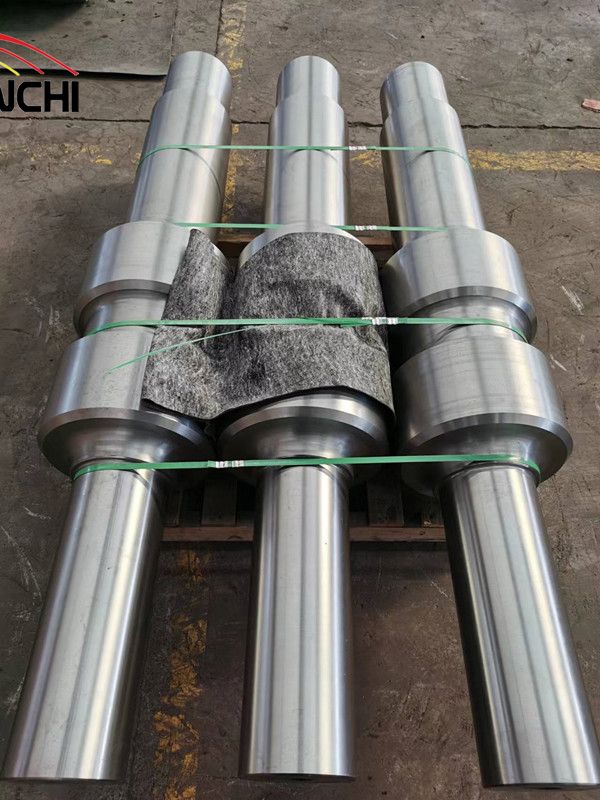
Custom Forging can be divided into three types based on deformation temperature: hot forging, warm forging, and cold forging. Hot forging occurs at temperatures above the recrystallization point of the billet metal, while warm forging is done below this temperature. Cold forging takes place at room temperature. Steel typically has a recrystallization temperature of about 460°C, with 800°C often used as the dividing line. Hot forging happens above 800°C, while the range between 300°C and 800°C is considered warm or semi-hot forging.
Several defects may arise from improper forging processes:
534
0
0

Comments
All Comments (0)